






A blog by Midlands Innovation Director, Dr Helen Turner
As we wrap up our tenth year, one word really sums it up: collaboration. From new initiatives to global investment missions, 2025 has shown just how powerful it is when universities, partners, government and industry come together with a shared purpose.
This year wasn’t just about celebrating a decade of impact; it was about building momentum for the future. We’ve seen ideas take flight, collaborations deepen, and opportunities to really showcase the amazing Midlands research and innovation ecosystem.
Talking ecosystems: a new era of cooperation
We’ve used the word ‘ecosystem’ a lot this year. It might bring to mind the Great Barrier Reef or the Amazon rainforest—complex, vibrant systems where every element plays a role and thrives through connection. Innovation ecosystems work in much the same way: they are intricate networks of people, organisations, infrastructure, and knowledge, all working together to create and exchange value.
However, like natural ecosystems, they need care to flourish. In the Midlands, 2025 has been about just that: creating the conditions for our innovation ecosystem to thrive. One significant step forward has been the launch of the Midlands Ecosystem Platform, powered by Dealroom. This dynamic tool provides us with a clear, real-time view of the region’s innovation landscape, mapping startups, investors, research strengths, and emerging clusters. This platform gives us the visibility of our ecosystem – and with this visibility, we can track growth, identify gaps, and build the evidence we need to further nurture our ecosystem.
Another highlight of the year, and a game-changer for our ecosystem was the launch of Forging Ahead. The project, which started in June, has made a strong start, establishing a core delivery team and delivering its first cohort, training 44 participants from across the Midlands. The Medici Enterprise training programme introduced participants to how to achieve impact through invention, spin-out, social enterprise, academic consultancy, collaboration with business, developing a service or delivering training.
Forging Ahead is a fantastic example of collaboration at scale: connecting technology transfer offices, sharing best practice, and attracting executive talent to turn spinouts into successful scale-ups. The project builds on our proven track record of collaboration in Midlands Innovation, and now we’re scaling to work in the Midlands as a community of 16 universities.
While new initiatives have been a major focus, we’ve also strengthened established collaborations that bridge the journey from research to real-world impact. Over the past year, the Invest in UK University R&D – Midlands Campaign has continued to connect investors, unlock new R&D opportunities, and support projects designed to drive growth across the region. With a broader scope and strengthened partnerships, the campaign returned to UKREiiF one year stronger, while expanding its reach through global missions to the USA, Japan, South Korea, Singapore, France and Germany.
Meanwhile, Midlands Mindforge has continued to make significant progress in supporting deep-tech, advanced manufacturing, and life sciences companies. Recognised as an exemplar by Research England, the Productivity Institute, and Universities UK, Mindforge’s role in driving innovation and regional economic growth has been reinforced. Its work is further strengthened by regional partners, aligned with the shared aims and objectives outlined in the compact signed by both Combined Authorities earlier this year.
On the topic of working at scale, the Energy Research Accelerator (ERA) joined the Hydrogen Valley programme, securing support from the EU’s Clean Hydrogen Partnership for Project Development Assistance. This project will create a detailed roadmap to establish a thriving hydrogen network—bringing together producers, distributors, and users to accelerate the transition to clean energy. Our track record in hydrogen innovation was confirmed when HyDEX took home the Best Place-Based Initiative award at the UK Knowledge Exchange Awards.
People and networks: The heart of collaboration
Just as a natural ecosystem depends on its roots and branches, our innovation ecosystem depends on relationships. In 2025, these networks—built over a decade of partnership—linked researchers, technicians, and partners, powering progress and turning big ideas into reality.
Those connections don’t just enable collaboration; they shape what we do. Our committees have been instrumental in steering new initiatives, ensuring they respond to real needs and opportunities. A standout example is the launch of AI.RDN+, a £3.4M initiative exploring how generative AI can transform PhD research. This project grew from discussions within the Graduate Schools Network, while Forging Ahead was developed through the Enterprise Committee—clear proof that regular discussion builds trust and translates into action.
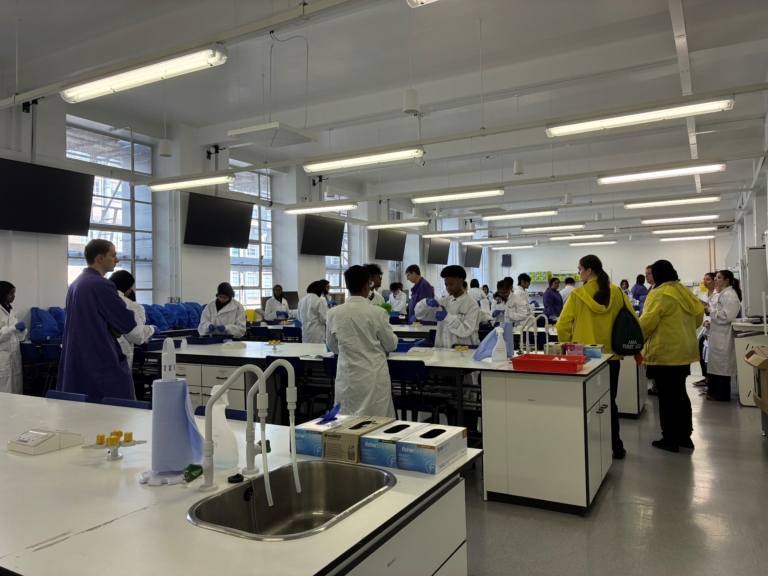
Our networks continue to flourish, hosting events that bring together diverse communities of specialists. From Flow Cytometry and Electron Microscopy to Extracellular Vesicles, these events remain essential forums for researchers and technical experts across the region—driving collaboration, knowledge exchange, and innovation. This was further demonstrated through the first Midlands Innovation Open Research Week, which brought partners together to champion transparency and reproducibility. Meanwhile, the Midlands Research Culture Network continued to enable conversations about how we create environments where researchers can thrive. And we celebrated our people— the fifth HETS event shone a spotlight on the incredible work of technicians—the often-unsung heroes of research.
Leading the conversation and showcasing our strengths
This year Midlands Innovation was recognised in the Government’s Post-16 Education and Skills White Paper, which called on the sector to build on its strong track record of collaboration. This acknowledgment reflects the important role our partnership plays in shaping national priorities.
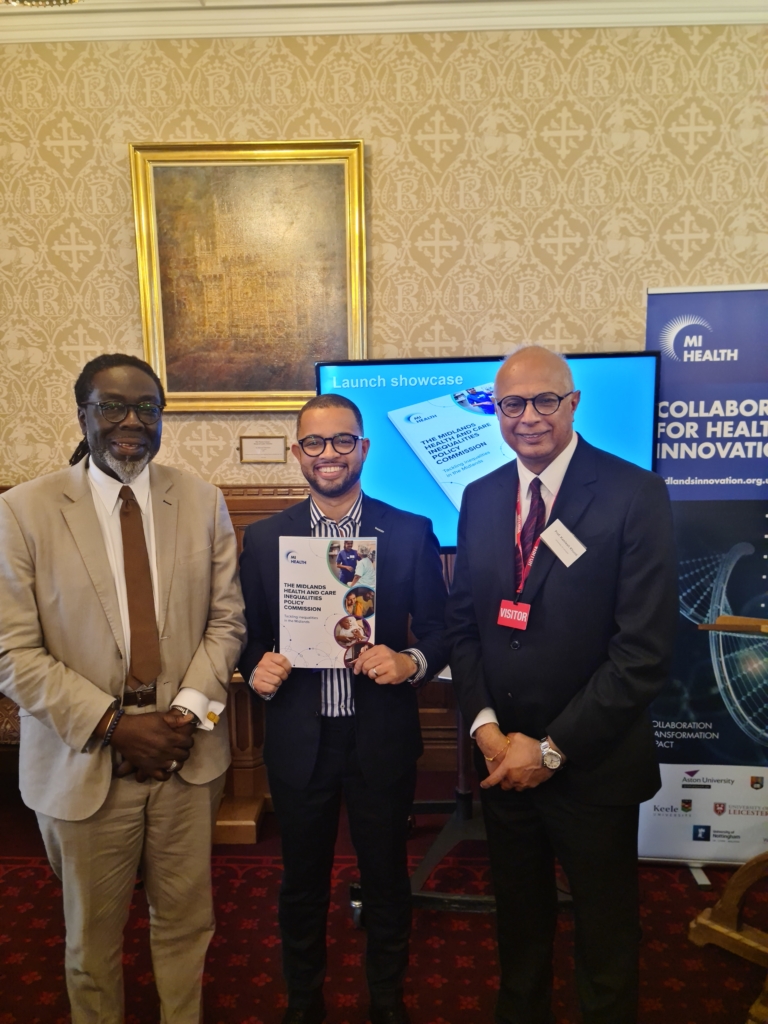
A perfect example of this influence was the parliamentary launch of the Midlands Health and Care Inequalities Policy Commission. Bringing together researchers, policymakers, and community voices, the Commission set out to understand the deep-rooted drivers of health inequality across the region. Through extensive stakeholder engagement, it has outlined a series of transformative, people-powered proposals that harness the Midlands’ research excellence to support healthier, fairer outcomes for all.
We also strengthened our direct engagement with government and political leaders. In June, we welcomed senior figures from the Department for Science, Innovation and Technology (DSIT), showcasing how the Midlands’ research strengths align with the Government priorities. At the Labour Party Conference in Liverpool, we discussed the role of universities in driving regional growth with Sonia Kumar MP, Samantha Niblett MP, and Vivienne Stern (CEO of UUK).
Our convening power continued at Westminster. The first of two discussions, chaired by Adam Jogee MP, explored how Midlands universities are collaborating to unlock the region’s economic potential. The second, hosted during Net Zero Week 2025, saw the Energy Research Accelerator convene industry, academia, and MPs to discuss how low-carbon fuels like green hydrogen and sustainable aviation fuel can support the UK’s net zero goals.
Looking ahead
As we step into 2026, we’re excited to keep the momentum going. Next year, we’ll be refreshing our strategy, expanding Open Research Week, and exploring new ways to share equipment and expertise across our universities. Most importantly, we’ll continue to do what we do best—working together to make a difference.
Look out for my next blog in January, where I’ll share some of the exciting things to watch for in 2026.
Before we close the year, I want to say a huge thank you to everyone across the Midlands Innovation partnership who has engaged with our programme of activities—and of course to the MI team for your hard work in supporting our collaboration. It’s the commitment and enthusiasm of our university colleagues that make this partnership so successful.
I’m looking forward to continuing our collaborative efforts in 2026.
Wishing you all Season’s Greetings and a happy, healthy New Year!