





A guest blog by Alice Cooper-Reeve, Chief Executive Officer at the University of Nottingham Innovation Park (UNIP) and Central Region Group Chair for the UK Science Park Association (UKSPA).
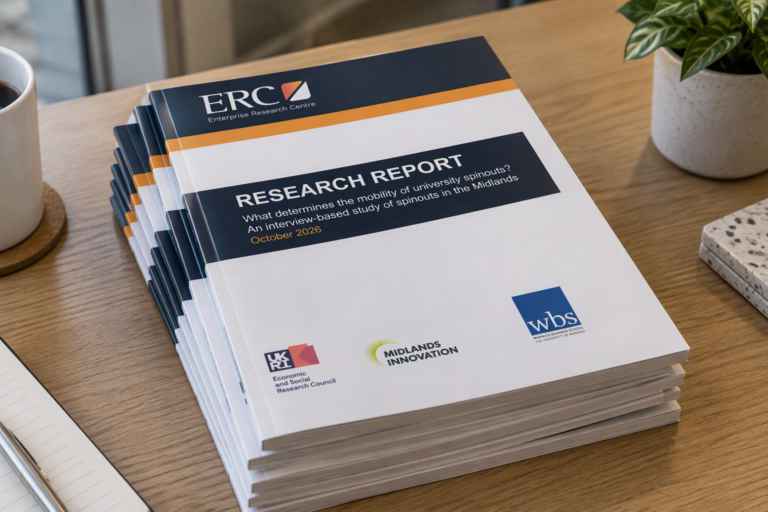
For many years, discussions about UK innovation have tended to focus on individual institutions, discoveries, or companies. Yet the recently published University Innovation in the Midlands: A New Era of Commercialisation report tells a different story. It is a story not simply about excellence, but about connection.
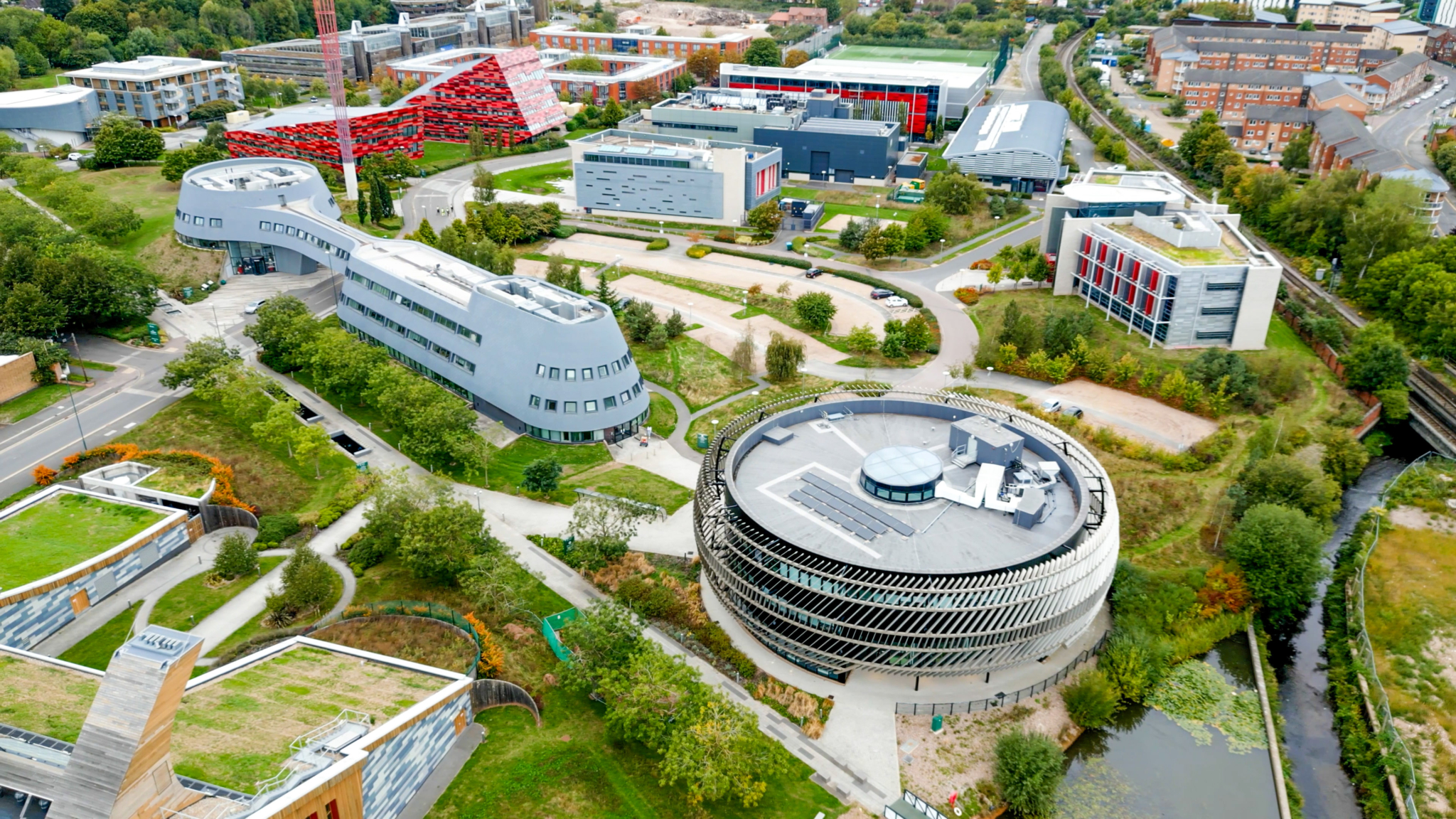
As Chair of UKSPA Central Group and CEO of University of Nottingham Innovation Park (UNIP), this is the message that resonated most strongly with me. The Midlands has long possessed world-class research, entrepreneurial talent, and industrial capability. What is changing now is the way these assets are being connected.
The report demonstrates the scale of the opportunity. Across 20 universities, the Midlands attracted £6 billion in research funding between 2019 and 2024 and has generated 352 university spinouts. The region hosts 74 university campuses and science parks and is planning thousands of hectares of additional innovation and industrial development space.
These are not the characteristics of an emerging innovation ecosystem; they are the characteristics of a region that has reached critical mass. Yet the most important takeaway from the report is not the scale of the assets themselves; it is the growing connectivity between them. Historically, the Midlands has often been viewed as a collection of local ecosystems: universities, science parks, and individual innovation programmes operating within their own geographies. Increasingly, however, we are seeing something bigger emerge. Universities are collaborating more closely, investors are coordinating activity across the region, and innovation assets are working together to create stronger pathways for founders, businesses, and investors.
This is a shift that closely aligns with the direction of travel within UKSPA.
The role of science parks and innovation clusters
As highlighted in UKSPA’s recent article, Backing Regional Innovation for Growth, innovation is most effective when it builds upon local strengths. Science parks and innovation clusters have a critical role to play as connectors between universities, businesses, investors and public sector partners. That word ‘connector’ feels increasingly important.
The value of innovation clusters extends far beyond real estate. The most successful clusters are those that facilitate collaboration, accelerate knowledge exchange, and help organisations access the people, networks, and capital they need to grow.
The Midlands report reinforces this point. The region already supports a substantial network of innovation assets, housing around 1,500 innovation-led businesses and supporting approximately 60,000 jobs. More importantly, these assets are becoming increasingly connected through initiatives such as UKSPA Central Group and broader regional partnerships.
Turning innovation into growth
That matters because the Midlands’ challenge has never been a lack of ideas. The report highlights that Midlands spinouts are generating impressive outcomes, including more than 3,100 jobs, over £295 million in turnover, and £767 million in investment attracted to date. Many demonstrate productivity and growth rates that compare favourably with counterparts elsewhere in the UK.
However, the report also identifies a long-standing challenge around access to growth capital. Midlands’ spinouts account for a significant share of UK spinout activity but attract a disproportionately small share of investment, while some businesses relocate away from the region in search of funding and growth opportunities.
No single innovation asset can solve these challenges alone. But together, we can create the conditions that help more companies start, scale and stay in the Midlands. We can create a more visible proposition for investors. We can better connect talent with opportunity. And we can ensure that the innovations emerging from our universities translate into lasting economic impact for our communities.
Science parks as strategic national assets
This thinking is also reflected in UKSPA’s new strategy, which positions science parks and innovation clusters as nationally significant assets and a cornerstone of innovation-led growth. Importantly, the strategy moves the conversation beyond individual sites and towards the collective value of connected innovation ecosystems. Science parks and innovation clusters are where research, talent, investment, and industry come together, creating the conditions for ideas to be commercialised, businesses to scale, and high-value jobs to grow. As UKSPA develops a stronger evidence base for the sector and works towards a clearer national framework for science parks and innovation clusters, it is helping articulate the contribution these assets make to productivity, competitiveness, and regional growth.
That perspective feels particularly relevant to the Midlands. Across the region, innovation assets are increasingly acting not only as places of activity, but as infrastructure for collaboration itself. Through networks such as UKSPA Central Group, innovation assets are building a stronger understanding of our collective offer, sharing opportunities and challenges, and creating a more coherent regional narrative. In doing so, we are not only strengthening support for innovative businesses; we are also helping government, investors, and policymakers better understand the capabilities that exist across the Midlands and where targeted investment can have the greatest impact. Collaboration does not dilute individual strengths; it amplifies them. By presenting a more connected and evidence-led proposition, we can make a stronger case for innovation investment and demonstrate the role that science parks and innovation clusters play as strategic national assets.
What comes next?
The report’s title speaks of a ‘new era of commercialisation’. That era has already begun. What gives me confidence is not simply the strength of any individual organisation or initiative, but the growing recognition that our greatest advantage lies in our collective effort.
Whether you are a university, science park, investor, entrepreneur, local authority, corporate partner, or ecosystem builder, there is a role to play in shaping what comes next. The most successful innovation ecosystems are not built by acting alone; they are built by people who choose to collaborate, share knowledge, and back one another’s success.
Across the Midlands we are seeing that happen through initiatives such as Forging Ahead, UKSPA Central Group, Midlands Mindforge, and many other regional and local partnerships. But the principle extends far beyond any single programme. Every region, cluster, and innovation community has opportunities to strengthen connections, build new partnerships, and create clearer pathways for innovation to thrive.
So my call to action is simple: get involved. Join the networks that exist around you. Contribute your expertise. Share opportunities. Make introductions. Support founders. Work across organisational boundaries. Champion your local innovation assets and help tell the story of your region.
Because when innovation ecosystems become more connected, they become more resilient, more investable, and more impactful. And when we work collectively, we create something far greater than the sum of our individual parts.